Introduction
If you are wondering how to keep a guinea pig happy indoors, the good news is that it is not difficult. Guinea pigs are gentle, social, and intelligent pets that can live long, healthy lives when they receive proper care. Unlike some small pets, guinea pigs depend on their owners for almost everything, including food, exercise, companionship, and a clean environment. When these needs are met, they become active, playful, and affectionate companions.
Many first time guinea pig owners believe that simply providing food and a cage is enough. In reality, these adorable pets need much more than that. They require space to move, opportunities to explore, fresh hay every day, and regular interaction with people or other guinea pigs.
This guide will explain how to keep a guinea pig happy indoors using simple and practical tips that every owner can follow.
Choose a Spacious Cage
One of the biggest factors in keeping a guinea pig happy is giving it enough room to move around. Guinea pigs are naturally active animals. They enjoy walking, running, and exploring their surroundings throughout the day.
A small cage can make your pet feel stressed and bored. Instead, choose a spacious enclosure that allows your guinea pig to exercise comfortably. Bigger is always better because extra space encourages natural behaviors and improves both physical and mental health.
Place food bowls, hay racks, hideouts, and water bottles in different areas so your guinea pig has reasons to move around during the day.
Always Provide Fresh Hay
Hay is the most important part of a guinea pig’s diet. Timothy hay should be available at all times because it supports healthy digestion and helps wear down continuously growing teeth.
Without enough hay, guinea pigs may develop digestive issues or dental problems. Fresh hay also gives them something enjoyable to chew, which keeps them entertained while satisfying their natural instincts.
Replace old hay every day so it stays clean and smells fresh.
Feed a Balanced Diet
A healthy diet plays a huge role in keeping indoor guinea pigs happy.
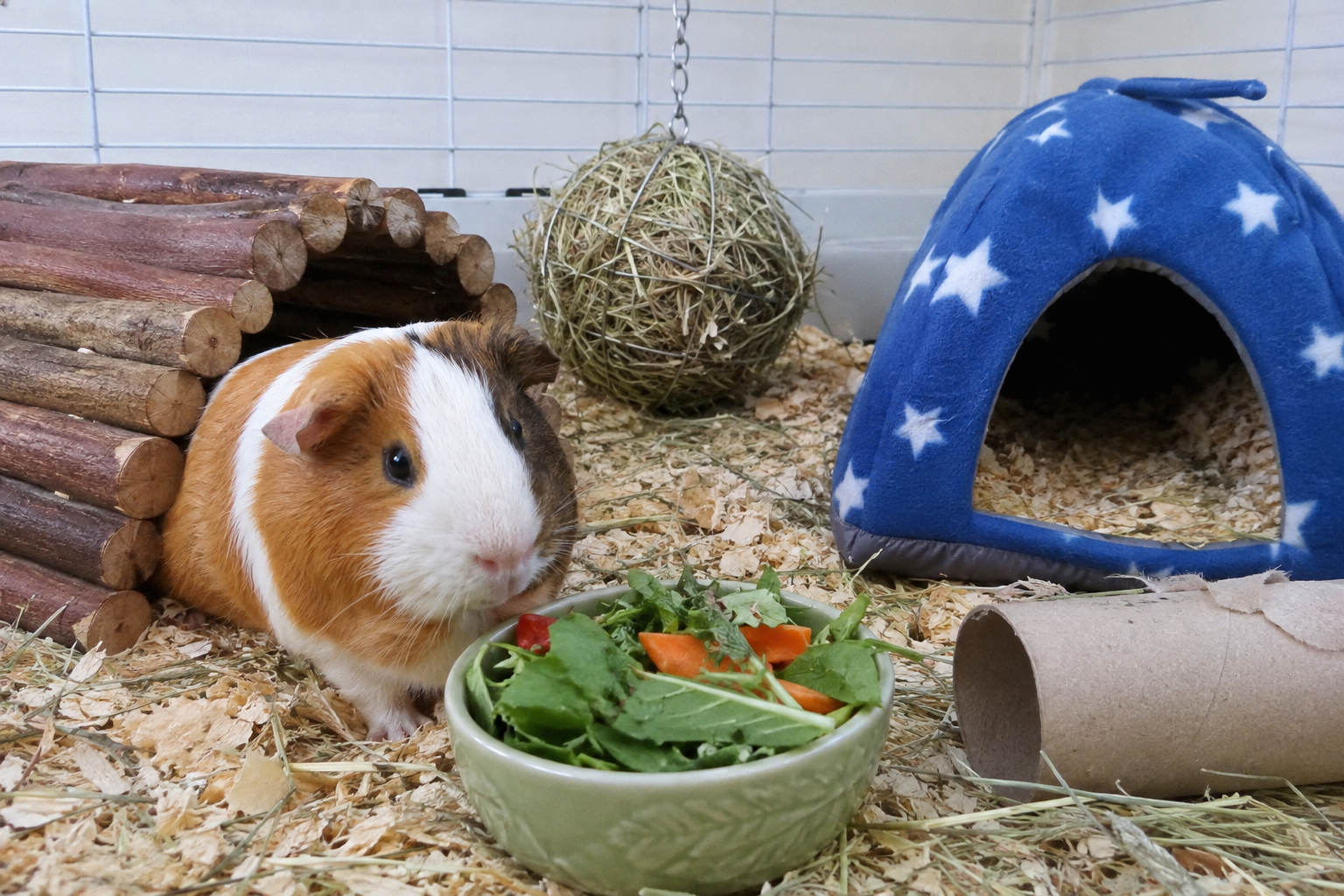
Offer fresh vegetables daily along with high quality guinea pig pellets. Leafy greens like romaine lettuce, cilantro, parsley, and bell peppers are excellent choices.
Vitamin C is especially important because guinea pigs cannot produce it naturally. Bell peppers are one of the best natural sources of Vitamin C and should be included regularly.
Avoid feeding sugary treats too often because they can lead to obesity and digestive problems.
Fresh clean water should always be available, and the bottle should be cleaned every day.
Give Them Daily Floor Time
Even the largest cage cannot replace exercise outside the enclosure.
Allow your guinea pig to enjoy supervised floor time every day in a safe indoor area. This gives your pet a chance to explore, run around, and burn extra energy.
Create a secure play area using pet panels or barriers. Remove electrical cords, toxic plants, and anything that could be dangerous.
You can add tunnels, cardboard boxes, paper bags, and small hideouts to make playtime even more exciting.
Daily exercise helps prevent boredom while improving muscle strength and overall health.
Keep More Than One Guinea Pig
Guinea pigs are social animals that naturally live in groups.
If possible, consider keeping two compatible guinea pigs together. Having a companion helps reduce loneliness and provides constant interaction throughout the day.
Many owners notice that paired guinea pigs become more active, confident, and playful than those living alone.
If you choose two guinea pigs, make sure they are introduced properly and have enough cage space to avoid conflicts.
Create Fun Hiding Places
Guinea pigs are prey animals, so they naturally enjoy having safe places where they can hide.
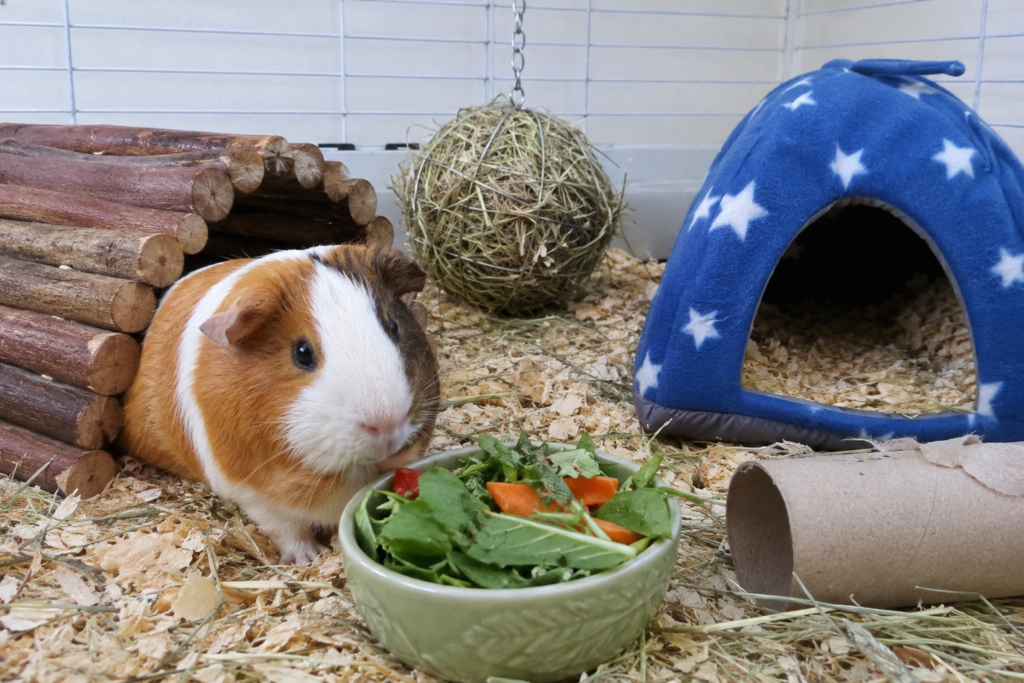
Every cage should include at least one hideout for each guinea pig. Wooden houses, fleece tunnels, cardboard boxes, and fabric hideaways all work well.
These hiding spots help reduce stress and give your pet a sense of security.
Changing the arrangement of tunnels and hideouts every few weeks also keeps the environment interesting.
Offer Safe Toys
Toys are an excellent way to prevent boredom.
Unlike some pets, guinea pigs do not need expensive toys. Simple household items often provide the most entertainment.
Safe toy ideas include:
Cardboard tubes filled with hay
Paper bags without ink
Untreated wooden chew blocks
Willow balls
Hay stuffed tunnels
Cardboard boxes with entry holes
Rotate toys every week so your guinea pig always has something new to explore.
Keep the Cage Clean
A dirty cage can quickly make a guinea pig unhappy and unhealthy.
Remove wet bedding and droppings every day. Perform a complete cage cleaning at least once a week using pet safe cleaning products.
Fresh bedding helps prevent odors and reduces the risk of respiratory infections.
A clean living space also encourages guinea pigs to stay active and comfortable.
Maintain the Right Indoor Temperature
Guinea pigs are sensitive to extreme temperatures.
The ideal indoor temperature is between 65 and 75 degrees Fahrenheit. Avoid placing the cage near heaters, air conditioners, fireplaces, or direct sunlight.
High temperatures can cause heat stress, while cold drafts may weaken your pet’s immune system.
Choose a quiet room with stable temperatures throughout the year.
Spend Time With Your Guinea Pig
Guinea pigs enjoy gentle interaction with their owners.
Talk softly while feeding them, offer healthy treats by hand, and allow them to become familiar with your voice.
Some guinea pigs enjoy sitting on their owner’s lap with a soft blanket underneath.
Never force handling if your guinea pig appears frightened. Building trust takes time, but patient daily interaction creates a stronger bond.
Eventually your guinea pig may recognize your voice and even squeak excitedly when you enter the room.
Watch for Signs of Stress
Understanding your guinea pig’s behavior helps you identify problems early.
A happy guinea pig often displays behaviors such as:
Running around excitedly
Popcorning or joyful jumping
Eating regularly
Making cheerful squeaking sounds
Exploring the cage
Relaxing comfortably inside hideouts
Signs of stress include hiding constantly, refusing food, weight loss, teeth chattering, or sitting quietly for long periods.
If these behaviors continue, consult an experienced veterinarian as soon as possible.
Provide Mental Stimulation
Indoor guinea pigs benefit from activities that challenge their minds.
Hide small portions of vegetables around the play area so your guinea pig can search for them.
Create simple obstacle courses using tunnels and boxes.
Rearranging toys occasionally also introduces new experiences without causing unnecessary stress.
Mental stimulation reduces boredom and encourages natural curiosity.
Use Comfortable Bedding
Soft, absorbent bedding keeps guinea pigs comfortable throughout the day.
Many owners prefer fleece liners because they are reusable, soft, and easy to clean.
Paper based bedding is another excellent option since it controls odors well and is gentle on sensitive feet.
Avoid cedar and pine shavings because their strong oils may cause respiratory problems.
Groom Your Guinea Pig Regularly
Long haired guinea pigs need frequent brushing to prevent mats and tangled fur.
Even short haired guinea pigs benefit from gentle brushing once a week.
Check nails every few weeks and trim them when necessary.
Regular grooming allows you to notice skin problems, lumps, or injuries before they become serious.
This routine also strengthens the bond between you and your pet.
Reduce Loud Noises
Guinea pigs have sensitive hearing.
Keep their cage away from loud televisions, speakers, barking dogs, and constant household noise.
A calm environment helps them feel secure and encourages normal behavior.
Soft background sounds are usually fine, but sudden loud noises may frighten them.
Establish a Daily Routine
Guinea pigs enjoy consistency.
Feed them at the same times each day, clean their cage on a regular schedule, and provide playtime consistently.
When guinea pigs know what to expect, they feel safer and more relaxed.
Many owners notice their pets becoming excited around feeding time because they recognize the routine.
Schedule Regular Health Checks
Even healthy guinea pigs should receive regular veterinary care.
Routine checkups help detect health issues before they become serious.
Monitor your guinea pig’s weight every week because sudden weight loss is often one of the first signs of illness.
Healthy guinea pigs are active, curious, and maintain a steady appetite.
Conclusion
Learning how to keep a guinea pig happy indoors is all about meeting its natural needs every day. A spacious cage, unlimited fresh hay, healthy food, regular exercise, social interaction, and mental stimulation all contribute to a happy and healthy pet. Clean surroundings, safe toys, comfortable bedding, and gentle handling help your guinea pig feel secure and loved.
When you invest time and attention into your guinea pig’s daily care, you will be rewarded with a friendly companion that is active, curious, and full of personality. By following these simple tips, you can create the perfect indoor environment where your guinea pig can thrive for many happy years.