If you are a dog owner, you have probably wondered whether it is safe to share some of your favorite fruits and vegetables with your furry friend. The good news is that many fresh fruits and vegetables are healthy for dogs when served in the right amount. They provide vitamins, minerals, antioxidants, and fiber that support your dog’s overall health. However, not every fruit or vegetable is safe, and knowing the difference can protect your pet from serious health problems.
In this guide, I will explain the best safe fruits and vegetables for dogs, their health benefits, how to serve them properly, and which foods you should always avoid.
Why Fruits and Vegetables Are Good for Dogs
Dogs are primarily meat eaters, but they can also benefit from plant based foods. Fresh produce contains nutrients that help improve digestion, support the immune system, maintain healthy skin, and promote a shiny coat.
Adding small portions of healthy fruits and vegetables to your dog’s diet can also be a great way to replace high calorie treats. This is especially helpful if your dog needs to lose weight or maintain a healthy body condition.
Remember that fruits and vegetables should only be treats or supplements. Around 90 percent of your dog’s diet should still come from a complete and balanced dog food.
Best Safe Fruits for Dogs
Apples
Apples are one of the healthiest fruits for dogs. They are packed with fiber, vitamin A, and vitamin C. Apples also help clean your dog’s teeth as they chew.
Always remove the seeds and the core before serving because apple seeds contain compounds that can release cyanide.
Serve apple slices as a crunchy snack or freeze them for a refreshing summer treat.
Blueberries
Blueberries are considered a superfood for both humans and dogs. They are full of antioxidants that help protect cells from damage and support healthy aging.
They are also low in calories, making them an excellent training reward.
Fresh or frozen blueberries can be served in moderation.
Bananas
Bananas are rich in potassium, magnesium, vitamin B6, and vitamin C. They are soft and easy for most dogs to eat.
Since bananas contain natural sugar, they should only be given occasionally as a treat.
Small banana slices are perfect for puppies and senior dogs.
Strawberries
Strawberries contain vitamin C, antioxidants, and fiber. They are naturally sweet and can be a tasty reward.
Wash strawberries thoroughly and cut them into small pieces before feeding.
Avoid canned strawberries because they often contain added sugar.
Watermelon
Watermelon is an excellent summer snack because it contains plenty of water to help keep dogs hydrated.
Remove all seeds and the rind before serving. Seeds may cause digestive problems, while the rind can be difficult to digest.
Offer small cubes of fresh watermelon on hot days.
Cantaloupe
Cantaloupe is another hydrating fruit rich in vitamins A and C.
Although healthy, it contains natural sugar, so moderation is important, especially for overweight dogs.
Mango
Mango is loaded with vitamins A, B6, C, and E.
Remove the large pit before feeding because it can become a choking hazard and contains small amounts of harmful compounds.
Serve peeled mango in bite sized pieces.
Pears
Pears provide fiber, copper, and vitamin C.
Always remove the seeds and core before offering pears to your dog.
Fresh pear slices make a healthy occasional snack.
Pineapple
Fresh pineapple contains vitamin C, manganese, and digestive enzymes.
Avoid canned pineapple because it usually contains sugary syrup.
Serve small fresh chunks occasionally.
Best Safe Vegetables for Dogs
Carrots
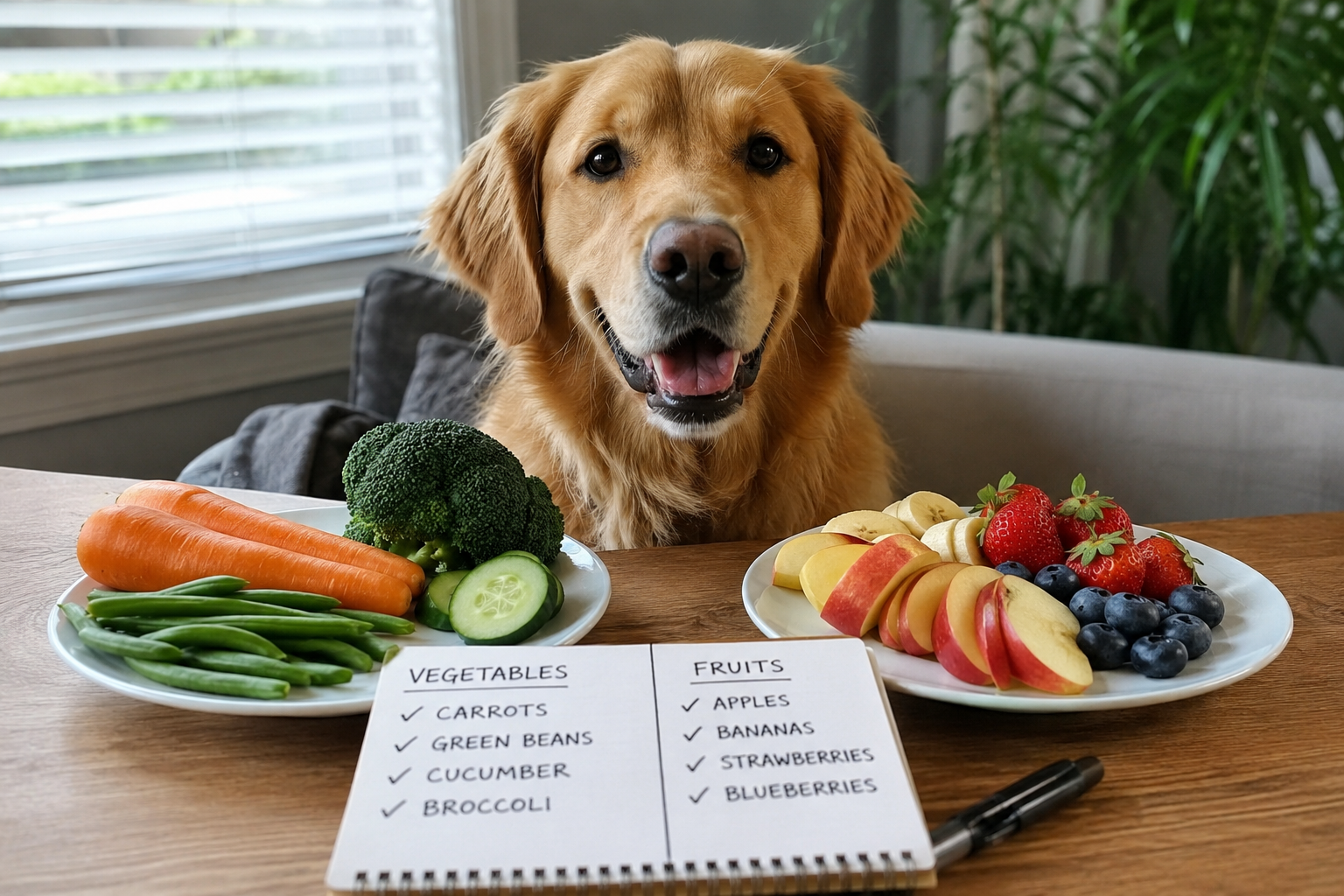
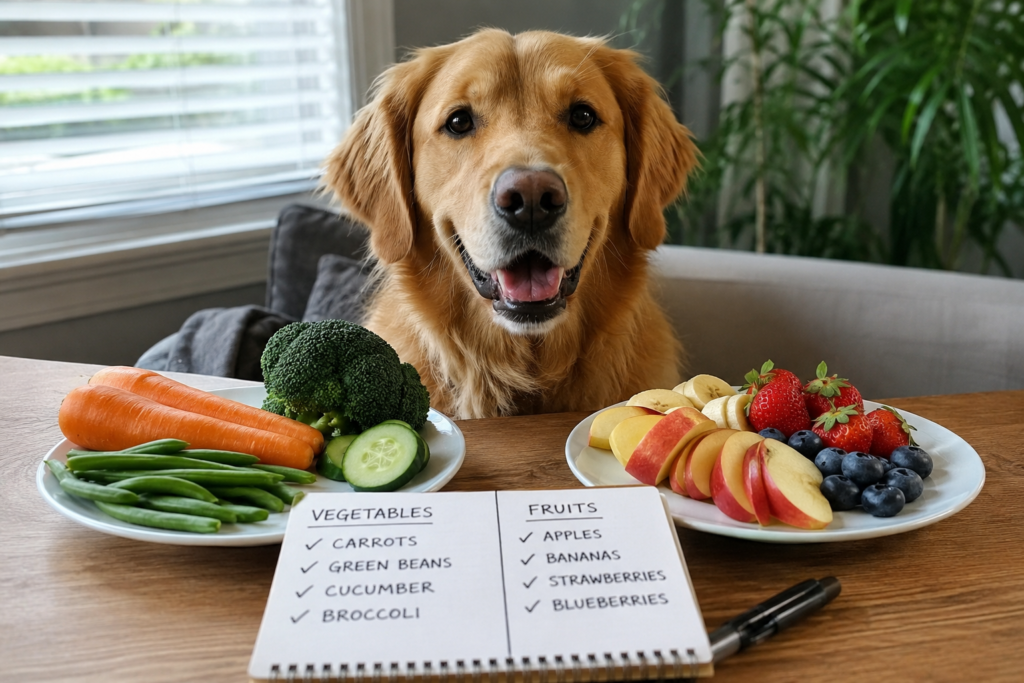
Carrots are one of the most popular vegetables for dogs. They are low in calories and high in vitamin A.
Crunchy carrots also help reduce plaque buildup on teeth.
They can be served raw or lightly cooked.
Green Beans
Green beans are an excellent low calorie snack packed with fiber and vitamins.
Fresh, frozen, or steamed green beans are all safe.
Do not feed green beans cooked with butter, garlic, onions, or heavy seasoning.
Cucumbers
Cucumbers are refreshing and low in calories.
They contain vitamin K and plenty of water, making them a perfect snack for overweight dogs.
Slice cucumbers into small pieces for easier chewing.
Pumpkin
Plain cooked pumpkin is excellent for digestive health.
It is rich in fiber and can help with both diarrhea and constipation.
Only use plain pumpkin without sugar or spices.
Sweet Potatoes
Cooked sweet potatoes provide fiber, vitamin A, and antioxidants.
Never serve raw sweet potatoes because they can be difficult to digest.
Boiled or baked sweet potatoes without seasoning are the best option.
Broccoli
Broccoli contains vitamin C and fiber.
Offer only small amounts because too much broccoli may cause stomach discomfort or gas.
Steam it lightly before serving.
Spinach
Spinach contains iron, calcium, and vitamins A, C, and K.
While safe in small portions, it should not become a regular part of your dog’s diet because it contains oxalates.
Peas
Green peas are rich in protein, vitamins, and minerals.
Fresh or frozen peas are safe for most healthy dogs.
Avoid canned peas with added salt.
Zucchini
Zucchini is easy to digest and low in calories.
It provides vitamins and antioxidants without adding too many calories to your dog’s diet.
Serve cooked or raw in small pieces.
Celery
Celery is a crunchy vegetable containing vitamins A, C, and K.
It can also help freshen your dog’s breath.
Cut celery into small pieces to reduce choking risk.
Fruits and Vegetables Dogs Should Never Eat
Some fruits and vegetables are dangerous for dogs and should always be avoided.
Grapes and Raisins
Even small amounts can cause sudden kidney failure in dogs.
Never feed grapes or raisins under any circumstances.
Onions
Onions damage red blood cells and can lead to anemia.
This includes raw, cooked, powdered, and dried onions.
Garlic
Garlic is toxic to dogs, especially in larger amounts.
Although some people believe it offers health benefits, veterinarians recommend avoiding it completely.
Avocado
Avocados contain persin, which can be harmful to some dogs.
The large pit also creates a choking hazard.
Cherries
Cherry pits contain cyanide and can block the digestive tract.
It is safest to avoid cherries entirely.
Mushrooms
Wild mushrooms can be highly toxic.
Unless approved by your veterinarian, it is best not to feed mushrooms.
Rhubarb
Rhubarb contains compounds that may affect your dog’s nervous system and kidneys.
Keep this plant away from pets.
How to Introduce New Fruits and Vegetables
Every dog is different. Some dogs tolerate new foods well, while others may develop digestive upset.
Introduce one new fruit or vegetable at a time.
Start with a very small portion and observe your dog for the next 24 hours.
Watch for signs like vomiting, diarrhea, itching, excessive scratching, or unusual behavior.
If your dog reacts negatively, stop feeding that food and contact your veterinarian if symptoms continue.
Tips for Feeding Fruits and Vegetables Safely
Wash all produce thoroughly before serving.
Remove seeds, pits, stems, and tough skins when necessary.
Avoid adding salt, butter, sugar, oils, or seasonings.
Cut food into bite sized pieces to prevent choking.
Serve cooked vegetables plain without spices.
Keep treats under ten percent of your dog’s daily calorie intake.
Always supervise your dog when trying new foods.
Can Puppies Eat Fruits and Vegetables?
Yes, puppies can enjoy many safe fruits and vegetables after they have started eating solid food.
Soft foods like bananas, pumpkin, cooked carrots, and blueberries are good beginner choices.
Offer only tiny portions because puppies have sensitive digestive systems.
A balanced puppy food should remain the main source of nutrition during growth.
Frequently Asked Questions
Can dogs eat fruit every day?
Yes, dogs can enjoy small portions of safe fruits daily, but they should never replace balanced dog food.
Which fruit is healthiest for dogs?
Blueberries are often considered one of the healthiest fruits because they are rich in antioxidants while remaining low in calories.
Can dogs eat raw vegetables?
Many raw vegetables like carrots, cucumbers, and celery are safe. Some vegetables such as sweet potatoes should always be cooked before feeding.
How much fruit should I give my dog?
Treats, including fruit, should make up no more than ten percent of your dog’s daily diet. Small dogs need only a few small pieces, while larger dogs can have slightly more.
Final Thoughts
Choosing safe fruits and vegetables for dogs is an easy way to provide healthy, natural treats that your pet will enjoy. Apples, blueberries, carrots, pumpkin, green beans, bananas, cucumbers, and watermelon are all excellent choices when served properly. These foods add important nutrients, support digestion, and offer a tasty alternative to processed treats.
At the same time, it is essential to avoid dangerous foods such as grapes, raisins, onions, garlic, cherries, and avocados. Always introduce new foods slowly, keep portions small, and make sure your dog’s primary nutrition comes from high quality dog food.
By making smart choices and offering healthy treats in moderation, you can help your dog stay happy, active, and healthy for years to come.