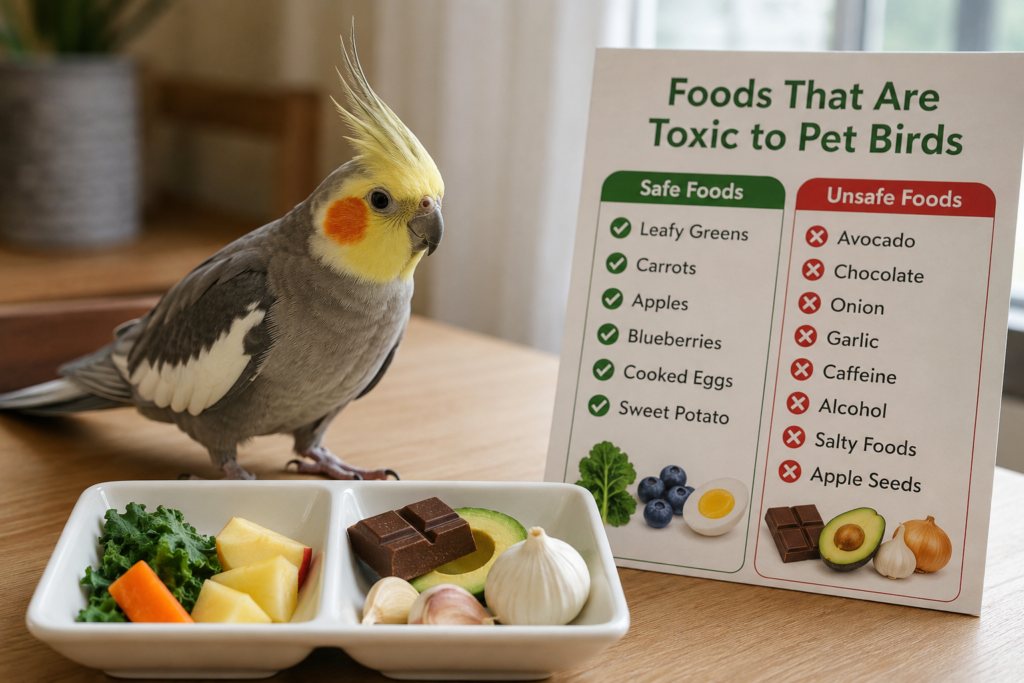
If you own a pet bird, one of the most important things you can do is learn which foods are safe and which ones can be dangerous. Many people think that if a food is healthy for humans, it must also be healthy for birds. Unfortunately, that is not true. Some everyday foods found in almost every kitchen can cause serious health problems for parrots, budgies, cockatiels, lovebirds, canaries, finches, and other pet birds.
Understanding foods that are toxic to pet birds can help you prevent accidental poisoning and keep your feathered friend healthy for years. Birds have fast metabolisms and sensitive digestive systems, so even a small amount of a harmful food may lead to severe illness.
In this guide, you will learn which foods to avoid, why they are dangerous, and what healthy alternatives you can safely offer your pet bird.
Why Birds Are Sensitive to Certain Foods
Pet birds have much smaller bodies than humans and process food differently. Their liver, kidneys, and digestive system cannot break down some chemicals that people eat every day without any problems.
Because of their size, even a tiny bite of a toxic food can affect a bird much faster than it would affect a larger animal. Some foods damage the nervous system, while others affect the heart, liver, or digestive tract.
Knowing what not to feed your bird is just as important as knowing what healthy foods to provide.
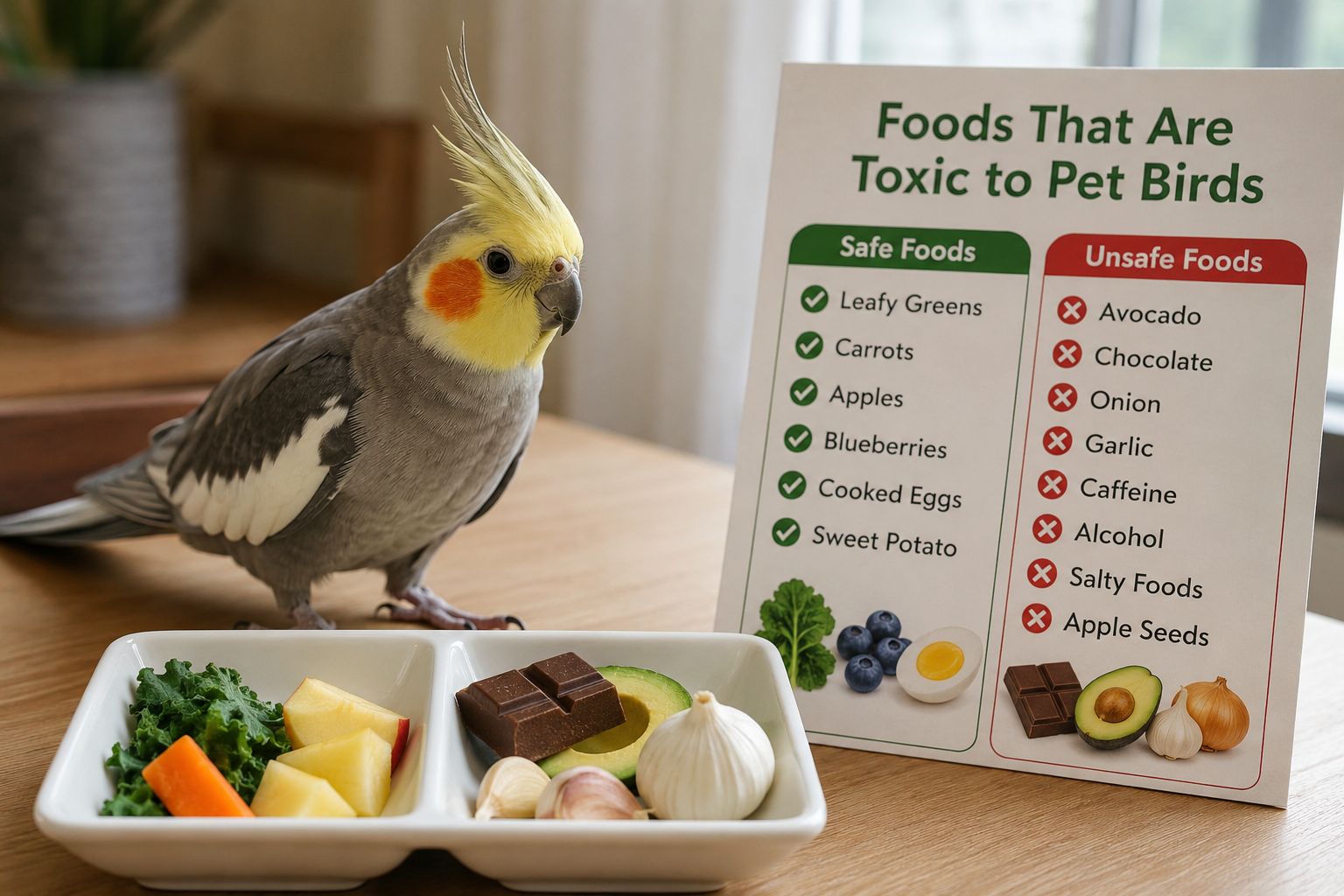
Avocado
Avocado is one of the most dangerous foods for pet birds. It contains a natural toxin called persin that can be deadly for many bird species.
The toxin is found throughout the fruit, including the flesh, skin, leaves, and seed. Eating even a small amount may cause breathing problems, weakness, heart damage, and sudden death.
If you enjoy avocado at home, make sure your bird never has access to it.
Chocolate
Chocolate is another food that should never be given to birds.
It contains caffeine and theobromine, both of which are toxic to birds. These substances affect the nervous system and heart.
A bird that eats chocolate may experience:
Poor coordination
Vomiting
Rapid heartbeat
Hyperactivity
Seizures
In severe cases, chocolate poisoning can be fatal.
Dark chocolate and baking chocolate contain even higher levels of these harmful compounds, making them especially dangerous.
Caffeine
Many people enjoy coffee, tea, soft drinks, and energy drinks every day, but these beverages should never be shared with a pet bird.
Caffeine overstimulates a bird’s nervous system and heart. Even a few drops may cause serious health problems.
Signs of caffeine poisoning include:
Rapid breathing
Fast heartbeat
Restlessness
Weakness
Tremors
Heart failure
Always keep cups of coffee or tea away from curious birds that like exploring tables and countertops.
Alcohol
Alcohol is extremely toxic to birds.
Even a tiny amount can affect the brain, liver, and heart. Birds become intoxicated much faster than humans because of their small body size.
Symptoms may include:
Loss of balance
Confusion
Difficulty breathing
Weakness
Coma
Death
Never allow your bird to taste beer, wine, liquor, or foods prepared with alcohol.
Onion and Garlic
While onions and garlic offer health benefits for humans, they can be harmful to birds when eaten in significant amounts.
These vegetables contain sulfur compounds that may damage red blood cells, leading to anemia. They can also irritate the digestive system.
Cooked foods seasoned with onion or garlic powder should also be avoided.
Fresh vegetables such as carrots, broccoli, bell peppers, peas, and leafy greens are much safer choices.
Salt
Too much salt can quickly become dangerous for birds.
Birds have very small kidneys, making it difficult for them to process excess sodium.
Salty foods include:
Potato chips
Pretzels
Salted popcorn
Processed meats
Instant noodles
Crackers
High salt intake may lead to dehydration, excessive thirst, kidney problems, and even death.
Instead of salty snacks, offer fresh vegetables or bird safe fruits.
Sugary Foods
Sugar is not usually toxic in the same way as chocolate or avocado, but too much sugar is unhealthy for birds.
Candy, cakes, cookies, sweet cereals, and desserts provide very little nutrition while increasing the risk of obesity and other health problems.
Birds should get natural sugars from fresh fruits rather than processed sweets.
Healthy fruit options include:
Apples without seeds
Blueberries
Strawberries
Papaya
Mango
Kiwi
Apple Seeds and Fruit Pits
Many fruits are excellent for birds, but their seeds and pits may contain cyanide producing compounds.
Avoid feeding the seeds or pits from:
Apples
Peaches
Cherries
Apricots
Plums
Always remove the seeds before offering fruit to your bird.
The fresh fruit itself is usually perfectly safe when prepared correctly.
Raw Beans
Many raw beans contain natural toxins that become harmless after proper cooking.
Raw kidney beans are particularly dangerous.
Never feed uncooked beans to your bird.
If you want to include beans in your bird’s diet, make sure they are thoroughly cooked without added salt or seasonings.
Xylitol
Xylitol is an artificial sweetener found in sugar free gum, candy, baked goods, toothpaste, and some peanut butter brands.
Although research on birds is limited, veterinarians recommend avoiding xylitol completely because it has caused severe poisoning in other pets.
Keep all sugar free products out of your bird’s reach.
Moldy or Spoiled Food
Birds should never eat food that has become moldy or spoiled.
Mold produces toxins that may damage the liver and digestive system.
Fresh fruits and vegetables should be removed from the cage after a few hours, especially during warm weather.
Always provide clean food and fresh drinking water every day.
Raw Potato and Green Potatoes
Raw potatoes, especially green potatoes, contain solanine, a natural toxin.
Cooked plain potatoes without salt, butter, or seasoning are generally safe in moderation.
Never feed green potato skins or raw potato pieces.
Dairy Products
Birds cannot digest dairy products very well because they produce very little lactase, the enzyme needed to break down lactose.
Small amounts may not always be toxic, but too much cheese, milk, or ice cream can cause digestive upset.
Fresh vegetables, fruits, seeds, and pellets are much healthier choices.
Fatty and Fried Foods
Fast food, fried chicken, pizza, and greasy snacks are unsuitable for pet birds.
These foods are high in unhealthy fats that can contribute to obesity and fatty liver disease.
Birds need balanced nutrition rather than processed human meals.
Foods High in Artificial Additives
Many packaged snacks contain artificial colors, preservatives, and flavor enhancers.
Although not all additives are proven toxic, they offer no nutritional value and may upset a bird’s digestive system.
Choose fresh, natural foods whenever possible.
Signs of Food Poisoning in Pet Birds
Knowing the symptoms of poisoning can help you act quickly.
Common warning signs include:
Loss of appetite
Vomiting
Diarrhea
Difficulty breathing
Weakness
Shaking
Loss of balance
Seizures
Unusual sleepiness
Collapse
If your bird shows any of these symptoms after eating a questionable food, contact an avian veterinarian immediately.
Do not wait to see if the symptoms improve on their own because birds often hide illness until it becomes serious.
Safe Foods for Pet Birds
After learning about foods that are toxic to pet birds, it is equally important to know what they can safely enjoy.
Healthy foods include:
High quality bird pellets
Fresh leafy greens
Carrots
Broccoli
Bell peppers
Sweet potatoes
Cooked brown rice
Cooked quinoa
Cooked beans
Blueberries
Bananas
Papaya
Mango
Strawberries
Cooked eggs in moderation
These foods provide vitamins, minerals, antioxidants, and fiber that support overall health.
Tips to Prevent Accidental Poisoning
Keeping your bird safe starts with good daily habits.
Always keep harmful foods away from your bird’s cage.
Wash fruits and vegetables before serving them.
Remove seeds and pits from fruit.
Avoid sharing meals from your own plate.
Store chocolate, coffee, alcohol, and sugar free products in secure places.
Read ingredient labels before offering any new food.
Ask an avian veterinarian if you are unsure whether a food is safe.
A little caution goes a long way in protecting your pet.
Frequently Asked Questions
Can pet birds eat bread?
Plain bread is not toxic, but it should only be offered occasionally because it has limited nutritional value.
Can birds eat bananas?
Yes. Bananas are safe and make a healthy treat when served in moderation.
Are peanuts safe for birds?
Fresh, high quality peanuts can be offered occasionally. Avoid moldy peanuts because mold toxins can be very dangerous.
Can birds eat eggs?
Cooked eggs are safe and provide a good source of protein. Do not add salt, butter, or spices.
What should I do if my bird eats toxic food?
Remove any remaining food immediately and contact an avian veterinarian as soon as possible. Quick treatment can greatly improve your bird’s chances of recovery.
Conclusion
Learning about foods that are toxic to pet birds is one of the best ways to protect your feathered companion. Common household foods such as avocado, chocolate, caffeine, alcohol, onion, garlic, raw beans, salty snacks, and fruit seeds can pose serious health risks. By offering a balanced diet of quality pellets, fresh vegetables, and bird safe fruits while avoiding harmful foods, you can help your bird live a longer, healthier, and happier life. Careful food choices today will make a lasting difference in your pet bird’s overall well being.